Short-Cycle vs. Long-Cycle Education: What Are the Differences ?
door Student.be
1 mins
Deel dit artikel

You're Now Ready to Begin Full-Time Higher Education! This type of education includes Higher Education Institutions (HE), Universities, and Schools of Arts (ESA). But what are the differences between short-cycle and long-cycle education? Which one should you choose?
Short-Cycle Education
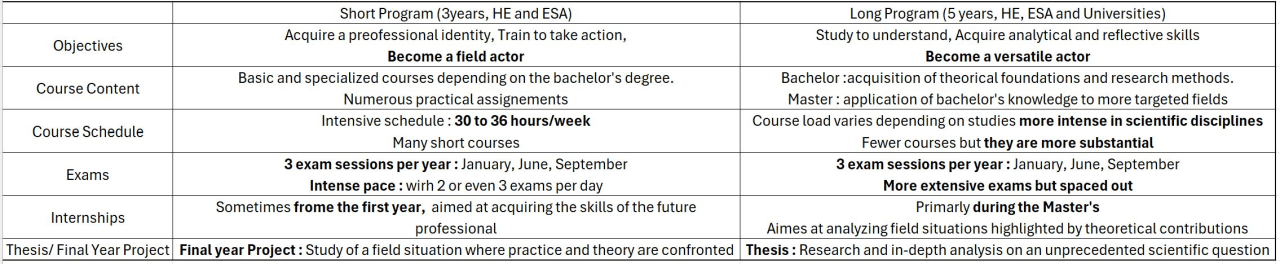
Short-cycle education lasts three years and consists of 180 credits spread over this period. Higher Education Institutions (HE) and Schools of Arts (ESA) offer this type of program, but Universities do not. This program takes the form of a bachelor’s degree, where students combine theory and practice. Internships in professional environments are frequent in this type of training. The goal is to ensure that, after these three years of education, students become field professionals, ready to take action and having already developed a professional identity during their studies.
Nowadays, these professional bachelor's degrees also offer master’s programs.
Long-Cycle Education
Long-cycle education lasts five years. Initially, students complete a three-year bachelor's degree of 180 credits. This degree prepares them for a Master’s program, which generally lasts two years and consists of 120 credits. This type of education is offered by Universities, Higher Education Institutions (HE), and Schools of Arts (ESA). The main difference between master’s programs in Higher Education Institutions (HE) and Schools of Arts (ESA) versus those in Universities lies in their approach:
- Higher Education Institutions and Schools of Arts develop practical skills related to the professional field.
- Universities focus on research methodology, analysis, and critical thinking.
Are you looking for the perfect program to start your journey? Discover all the available schools and programs, and choose the one that matches your ambitions! 👉 Explore our program pages here.
Lees andere artikelen per onderwerp👇
Wat vond je van deze post?